Prof. Véronique Boisvert of the Centre for Particle Physics and Astronomy (CPPA) at Royal Holloway has received an ATLAS Outstanding Achievement Award at an official ceremony held by the international ATLAS experiment at the Large Hadron Collider (LHC) in Geneva, Switzerland.
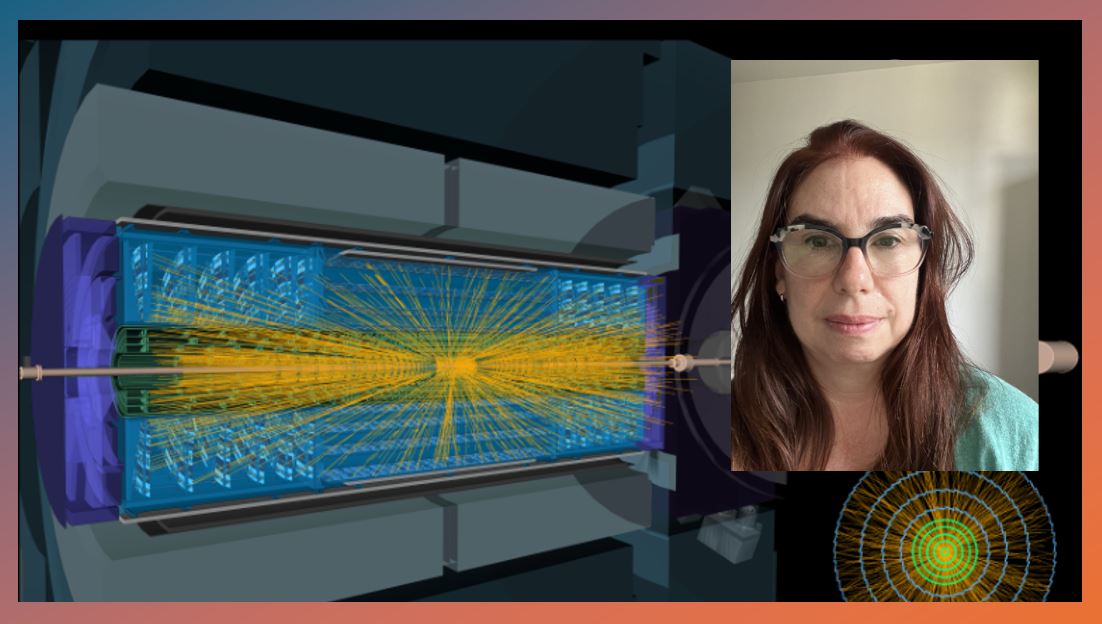
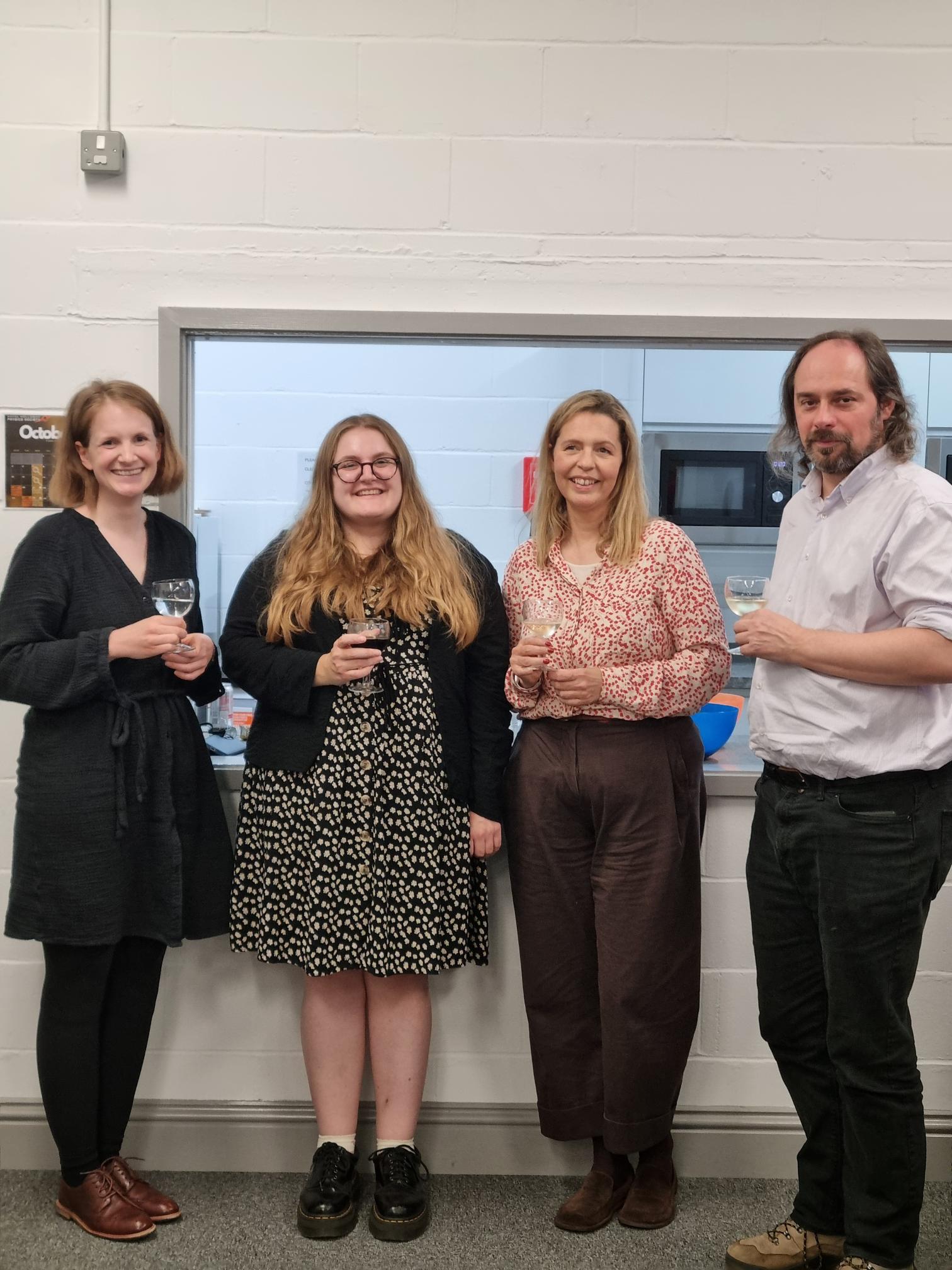
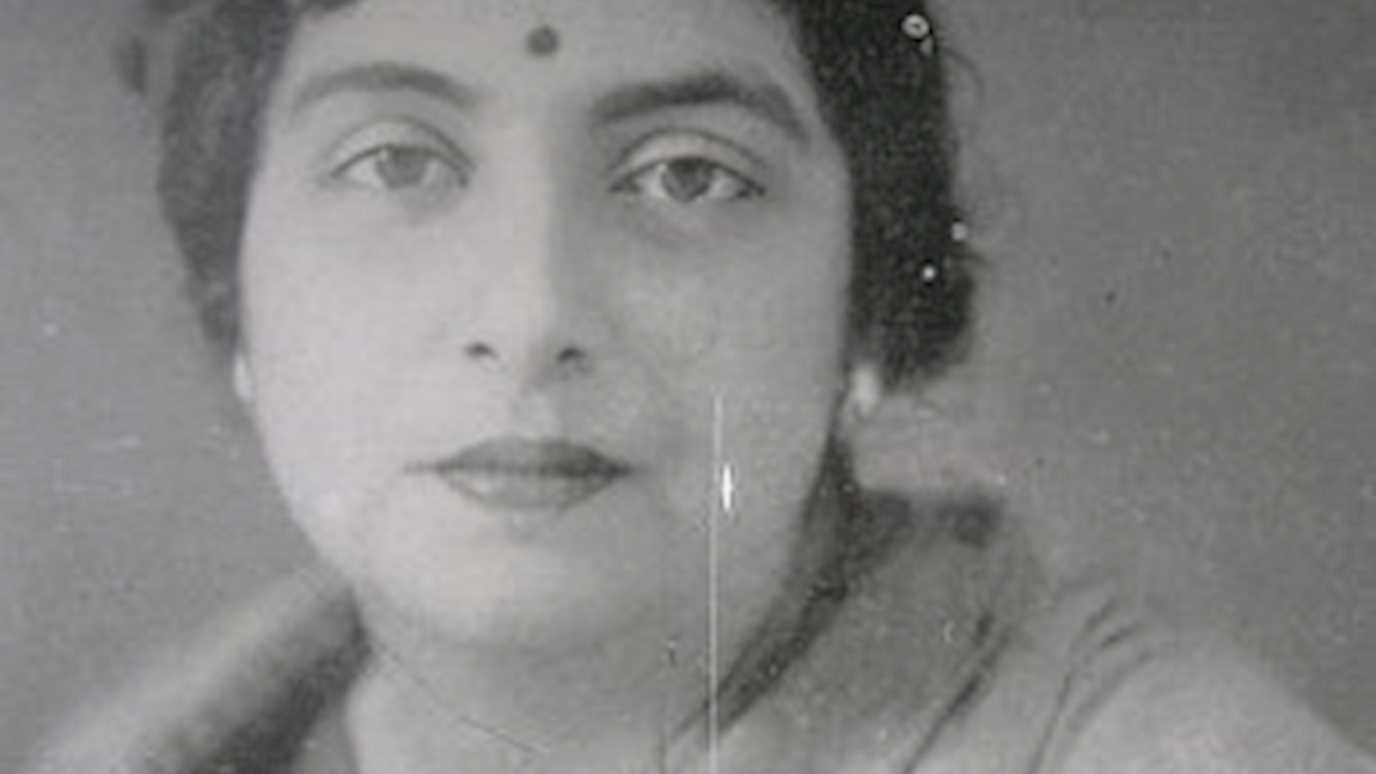
Prof. Véronique Boisvert of the Centre for Particle Physics and Astronomy at Royal Holloway
The award is in recognition of Prof. Boisvert’s co-leadership of a large international team of scientists that did research and development, over a period of five years of innovative solutions for reconstructing the trajectories of fast-moving sub-atomic particles.
Prof. Boisvert commented, "It is a great honour for me to have received this award; it is the culmination of several years of work done in collaboration with many talented physicists and engineers, both in our group at Royal Holloway and in the ATLAS collaboration. I can’t wait for the upgraded detector to start taking data in a few years and see the Event Filter farm in action!”
The awards were celebrated on 15 October 2026, recognising outstanding contributions in support of the ATLAS experiment. “These awards recognise an extraordinary range of achievements,” said Martin Rybar, co-chair of the 2026 Awards Committee. “What unites these efforts is the collaborative spirit of the people involved. Their work keeps ATLAS running and makes the full breadth of our physics programme possible.”
Prof. Véronique Boisvert and Prof. Stephanie Majewski (Univ. Of Oregon, US; also a recipient of the award) jointly led, over a period of five years, a large team of physicists and engineers carrying out an advanced programme to research and develop methods to rapidly and accurately reconstruct the trajectories of energetic particles produced in the ATLAS experiment. This team, numbering in excess of 100 members, developed several different competing algorithms to execute this complex task (technically known as “Event Filter Tracking”), using different types of computing chip: conventional CPUs, GPUs (Graphical Processing Units, often used for the fast rendering of graphics in computer games) and FPGAs (Field Programmable Gate Arrays; a specialized type of chip with the flexibility to be reconfigured internally as desired, even after it has been manufactured and installed in a computer). The competing approaches to solve this problem were then rigorously benchmarked against multiple performance, operations and cost metrics, leading to the choice of the most effective technology option.
The award was given specifically for “four years of innovation in CPU-, GPU- and FPGA-based tracking, culminating in the December 2025 reports that enabled the ATLAS Event Filter technology choice” to the two team leaders, and also to key members of the team.
Dr Simon George, a Senior Research Physicist, also at Royal Holloway, is an authority on trigger and data acquisition systems for collider experiments and leads the overall ATLAS Event Filter upgrade project. He chaired the committee which was tasked with making the final choice on the technology to be adopted.
The ATLAS Experiment
Royal Holloway was one of the founding institutes of the ATLAS experiment, in 1992.
The ATLAS experiment is a complex and sophisticated detector of sub-atomic particles. It is a massive cylinder-shaped scientific instrument, which is the size of half a football field and, at 7,000 tonnes, weighing as much as the Eiffel tower. The experiment collides extremely high energy protons head-on 40 million times per second. Each of these collisions results in many high-energy particles being created, that have to be analysed extremely rapidly by the so-called “trigger system”, with a view to decide if the collision should be recorded in permanent storage, so that it can be studied in full detail at a later time.
The ATLAS experiment has been operating since 2009 and is due a major equipment upgrade in 2030. The Event Filter Tracking is one of the systems that will be upgraded, using the technology that has now been decided on.
The Large Hadron Collider and the ATLAS experiment are sited at CERN, the European Laboratory for Particle Physics in Geneva, Switzerland.
ATLAS expertise at Royal Holloway
The Centre for Particle Physics and Astronomy (CPPA) at Royal Holloway comprises, among other researchers, a group of physicists (PhD students, postdoctoral researchers, engineers and academics) that actively participate in the ATLAS experiment. The Royal Holloway group expertise spans across the experiment’s trigger and data acquisition systems, and also researching the physics of the two heaviest elementary particles ever observed (the top-quark and the Higgs boson) as well as searching for evidence of potential new, yet undiscovered, fundamental particles.
More information can be found in the Press Briefings released by the ATLAS Collaboration (2026 ATLAS Outstanding Achievement Awards) and by the CERN laboratory (Outstanding achievements of ATLAS collaboration members celebrated at CERN).