



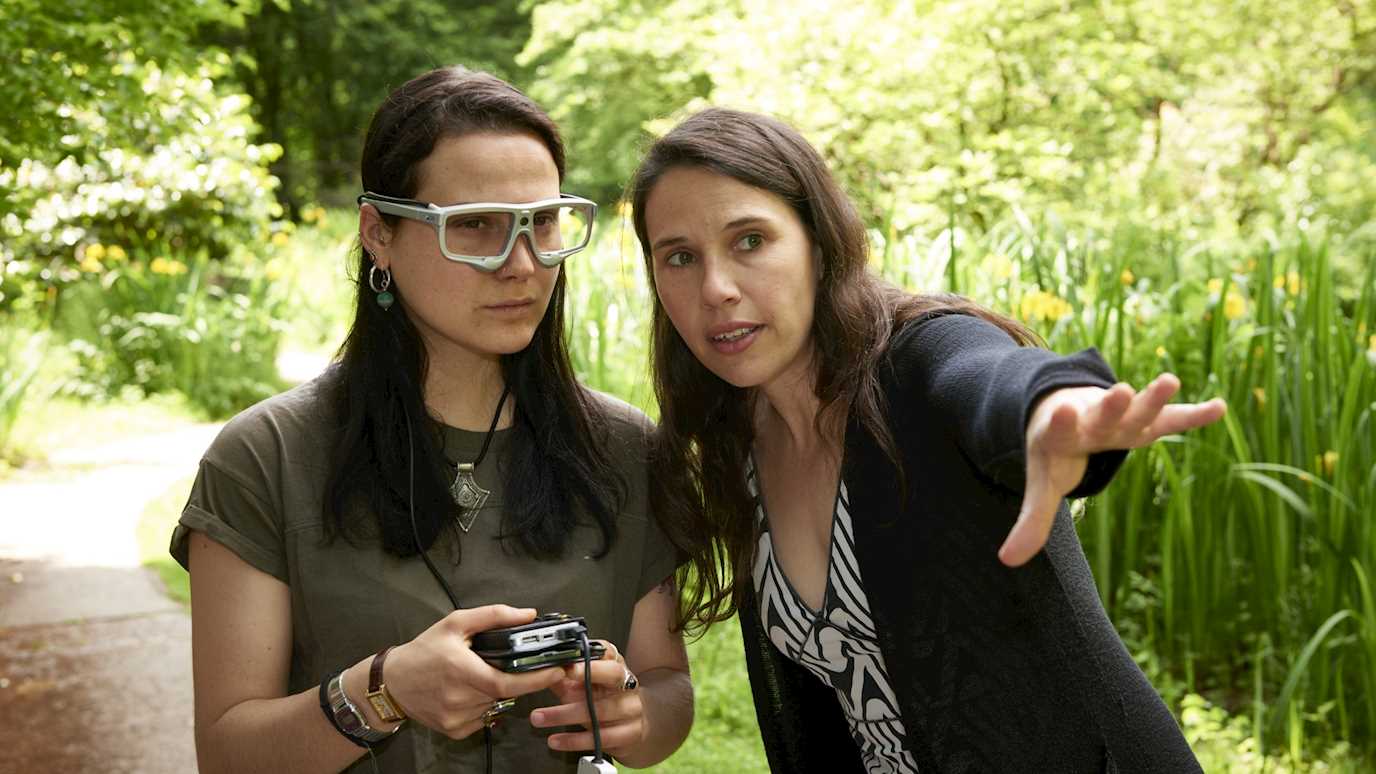

Prof Adrian Goldman
Please see below the next Department Seminar which will be featuring Prof Adrian Goldman.
Integral membrane pyrophosphatases: Structure, Function and Drug Design.
Summary: Integral membrane pyrophosphatases occur in all kingdoms of life apart from multicellular animals. They are essential players in combatting inorganic stress in (archae)bacteria, plants and protozoan parasites such as Plasmodium falciparum, the causative agent of malaria. In addition, there are no enzymes that even remotely resemble these proteins, making them intriguing targets for drug design.
Over the last ten years, we have solved the structures of two different model pyrophosphatases in a number of states, with and without potential drugs bound. We have used electrometry and, In our most recent work, we have used EPR, in particular PELDOR, to measure the distances between residues as a function of inhibitor/substrate binding, and we have solved time-resolved structures of the enzyme with substrate present. All of the above has led to a “binding change” model of catalysis, and has also enabled us to identify druggable approaches outside the active site.
Relevant papers:
- Strauss, J et al.,Functional and structural asymmetry suggest a unifying principle for catalysis in integral membrane-bound pyrophosphatases EMBO reports in press (2024)
- Johansson, NG et al. “Discovery of Membrane-Bound Pyrophosphatase Inhibitors Derived from an Isoxazole Fragment.” ACS Med Chem Lett, vol. 11, no. 4, 2020, pp. 605-10.
- Vidilaseris, K et al. “Asymmetry in catalysis by Thermotoga maritima membrane-bound pyrophosphatase demonstrated by a nonphosphorus allosteric inhibitor.” Sci Adv, vol. 5, 2019, pp. eaav7574. DOI: 10.1126/sciadv.aav7574
- Li, K-M et al. “Membrane pyrophosphatases from Thermotoga maritima and Vigna radiata suggest a conserved coupling mechanism.” Nat Commun, vol. 7, 2016, pp. 13596. DOI: 10.1038/ncomms13596
- Kellosalo, J et al. “The Structure and Catalytic Cycle of a Sodium-Pumping Pyrophosphatase.” Science, vol. 337, 2012, pp. 473-76. DOI: 10.1126/science.1222505
Biography: Adrian Goldman grew up in West Byfleet, not a million miles from Royal Holloway. His undergraduate degree (BA (Hons), Natural Sciences) was from Queens’ College, Cambridge in 1980, whereupon he went to Yale University to do a Ph.D. with the Nobelist Tom Steitz (1985). He was Tom’s last graduate student not to work on proteins that interacted with DNA or RNA. He stayed in Tom’s lab as a Lucille P. Markey fellow till 1987, when he accepted a position as an Assistant Professor at Rutgers (1987-1992). He was recruited from Rutgers to start x-ray crystallography in Finland at the Centre for Biotechnology in Turku in 1992, whence he moved to the Institute of Biotechnology at the University of Helsinki in 1999. In 2013, he was recruited to the University of Leeds for a chair position in membrane biology, and he stayed there till Brexit drove him back to Finland in 2020. He is currently a Professor in the Faculty of Biological and Environmental Sciences at the University of Helsinki, a visiting professor at the University of Leeds and a Lecture Professor at Nankai University. He has published over 150 articles in journals including Science, Science Advances, Nature Communications etc, including three citation classics.
When he is not doing science - which is currently 80% of the time - he can be found in Royal Holloway studying for an MA in Theatre Directing. Directing plays, and performing arts in general, have been close to his heart since he played the dead body in his own production of Arsenic and Old Lace in Cambridge. He’s found it fun to be on the other side of the educational equation, and even managed to pass the plagiarism test without cheating.
Host: James McEvoy