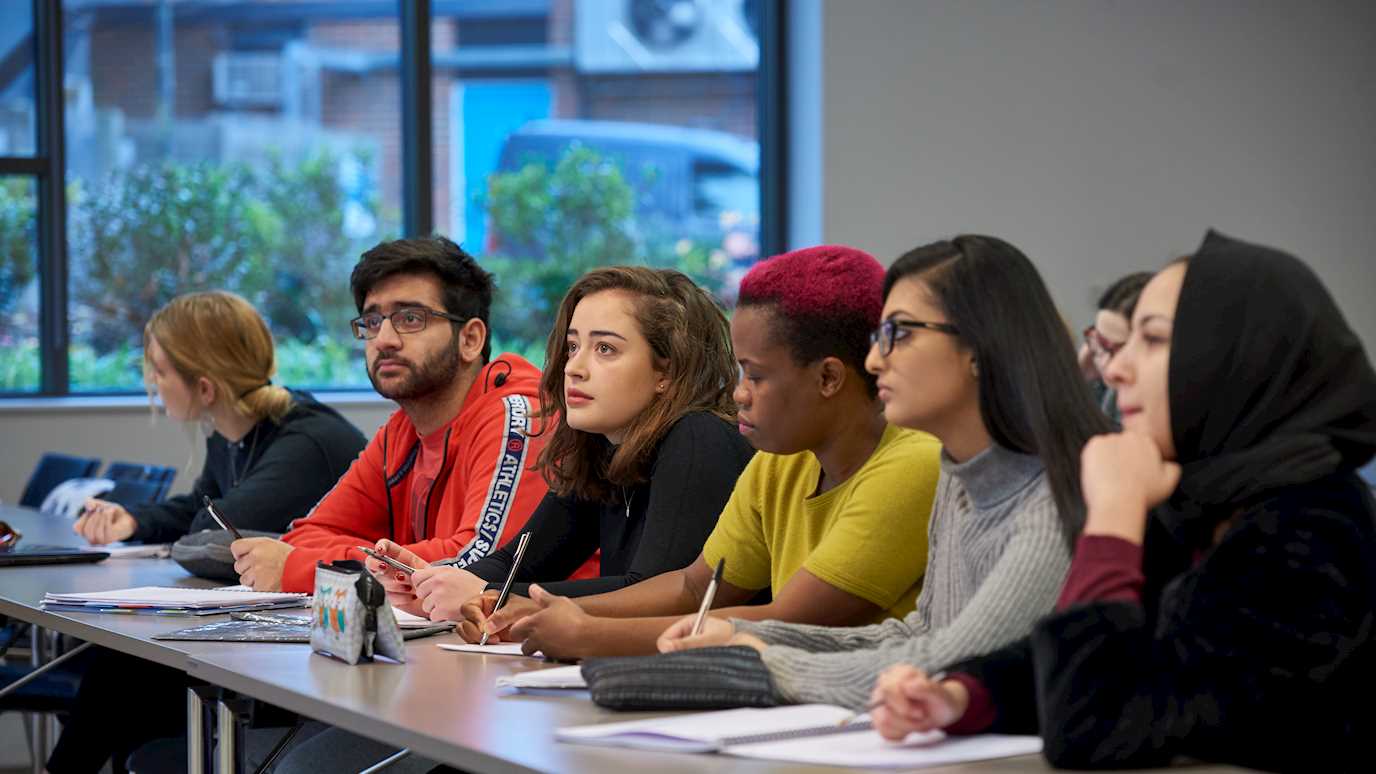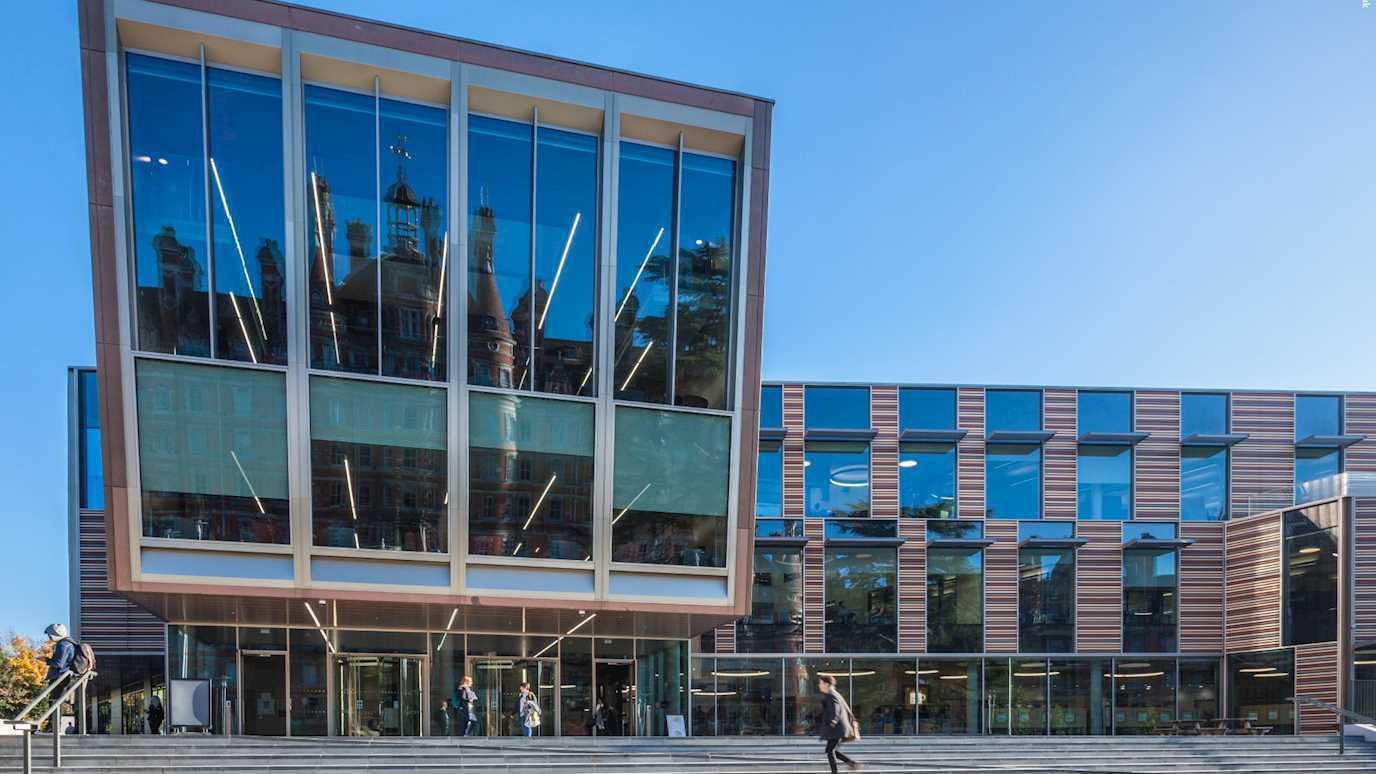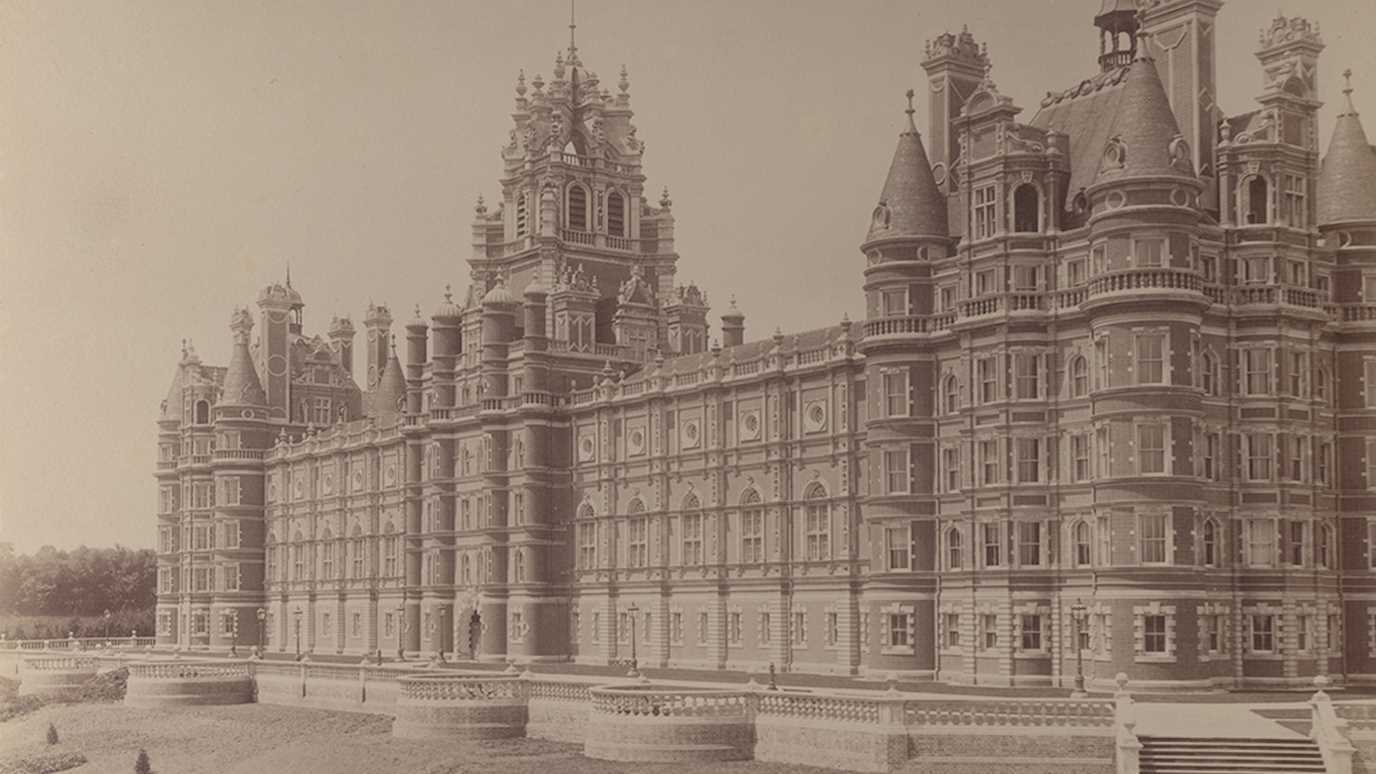
The Geography Department houses a wide variety of facilities catering for a range of subject areas. Students studying Geography at Royal Holloway gain ‘hands on’ experience of these facilities under the supervision of experienced technical staff.
Geocomputing Labs
Our Geocomputing Labs provide advanced facilities that go far beyond the capabilities of the University’s standard Open Access PC Labs. The labs contain high-performance computers equipped with Geographical Information Systems (GIS), advanced cartographic and image-processing packages and audio-visual editing tools for qualitative data analysis.
The labs are designed primarily for postgraduate study though undergraduate students may be granted access for classes requiring specialist software, or for independent research that cannot be supported in the main PC labs.
The computer labs are managed by dedicated IT professionals who provide advice and troubleshooting. Our department’s Graphics Technician is available for guidance on cartographic software, including ArcGIS and QGIS.
Graphics Suite
The Humphries Graphics Suite houses specialist large format printing and encapsulating services (from A4 to A0 size). The facility is managed by the department’s Graphics Technician who can advise on the use of graphics software for producing diagrams, data displays and artwork for publication.
Laboratories
The department has a number of scientific laboratories located across three separate buildings allowing for the study of a wide range of subjects within physical geography. The majority of our group practicals take place in our large Teaching Laboratory. Our main research themes are reflected in the more specialist facilities we possess.
Laboratory Facilities
Sedimentology and Soil Micromorphology
A wide range of sediment analyses can be carried out across the department’s laboratories. This includes magnetic susceptibility, loss on ignition, and particle size analysis. Across the labs a range of facilities can be found including wet and dry sieving for micro and bulk samples, low and high temperature drying areas, furnaces, an aggregate stability rig and a calcimeter. The department uses a Malvern Mastersizer laser granulometer to analyse finer sediment fractions.
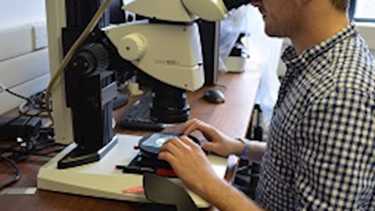
The Thin Section Suite is a facility dedicated to the preparation and analysis of varved sediments in order to develope varve chronologies and reconstruct recent palaeo-environments. The suite contains a range of specialised equipment including grinder polishers, a Jones and Shipman surface and profile grinding machine, and a Logitech cut-off saw. The finished thin sections are analysed in our Image Analysis Suite using specialist petrological microscopes.
Palaeoecology
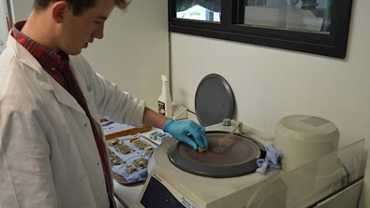
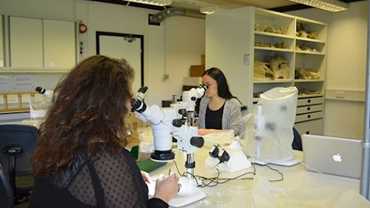
Our laboratories allow for a wide range of micro- and macro-palaeoecological proxies to be studied. Across the labs facilities are available for the preparation of sediment samples and the subsequent analysis of pollen, plant macrofossils, charcoal, diatoms, foraminifera, chironomids and molluscs.
The Department has a Clean Laboratory with facilities for the chemical preparation of proxies and the preparation of materials for radiocarbon dating. In our microscope lab we have an extensive pollen reference collection to aid pollen grain identification. Our Palaeoecology Laboratory houses important reference collections including stone tools, molluscs and plant macrofossils.
Analytical Chemistry
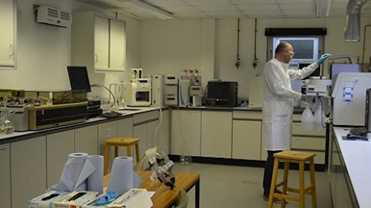
The Munro Fox Laboratories are predominantly set up for the analyses of nutrients and metals in ecological materials (water, soil, vegetation, shells). It also offers facilities relevant to Quaternary Science and Sedimentology including a Microwave Digester (MarsXpress), a segmented flow colorimeter, an ion chromatography system , soil aggregate stability prototype and we have access to an ICP-OES (Inductively Coupled Plasma Optical Emission spectroscopy) . The lab also houses equipment for the analysis of pH, dissolved oxygen, conductivity , turbidity of water in the field.
Geochronology
The Geochronology Building houses both our Optically Stimulated Luminescence (OSL) and Tephrochronology Laboratories. OSL is a technique used to identify when samples were last exposed to sun light. The OSL facility comprises laboratories in both light and dark room conditions, allowing for sample preparation, and contains 6 Riso TL-DA series TL/OSL readers. The Tephrochronology Lab facilities, and those in the Department's Clean Laboratory, permit separation of cryptotephra particles from sediment and the subsequent analysis of tephra shards to create chronologies from the late Quaternary period.
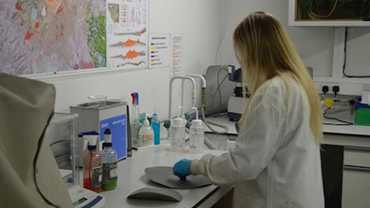
The production of thin sections from annually laminated, or varved, sediments also allow us to generate very high precision varve chronologies (see our 'Soil Micromorphology' page).