State-of-the-art facilities
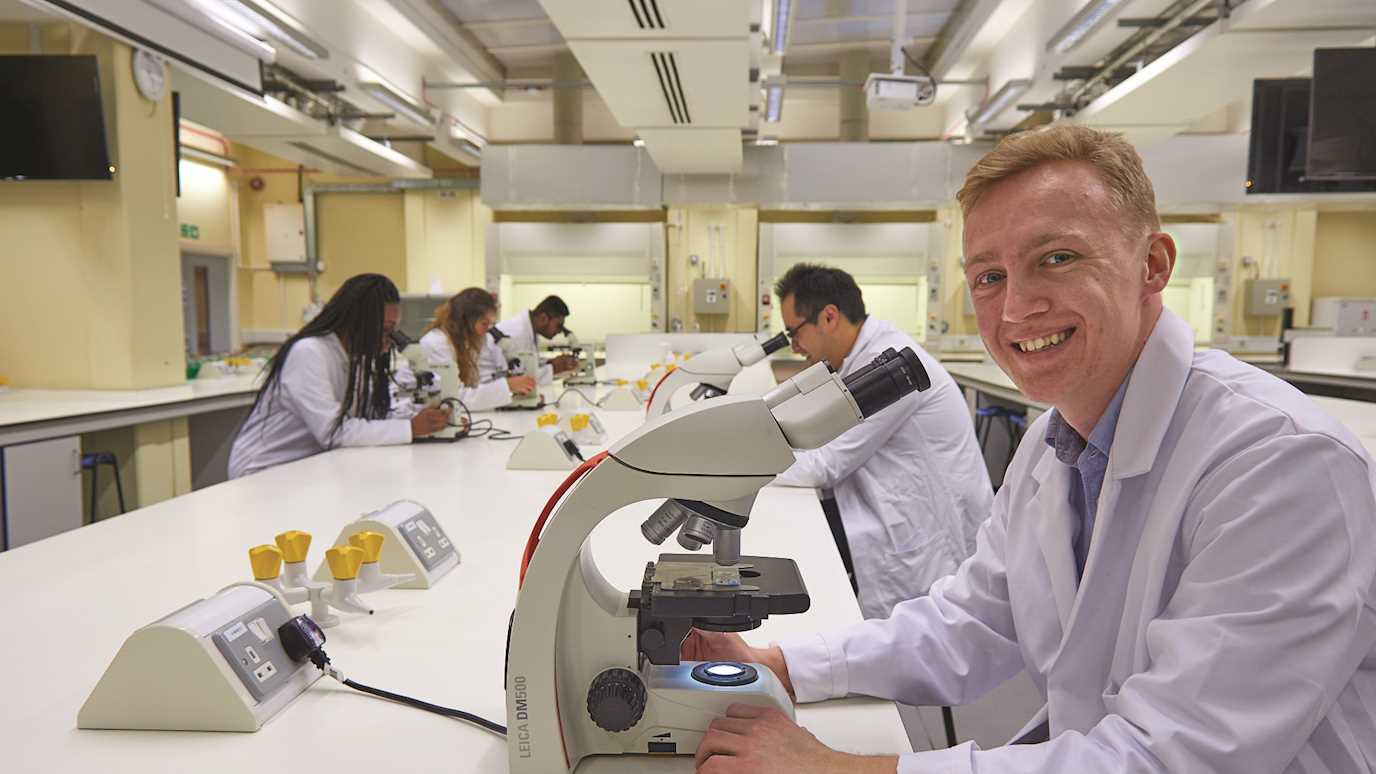
We continue to invest in facilities for teaching and research, such as equipment for mass spectrometry, bioinformatics and protein and gene sequencing. We also have top-class imaging facilities including confocal laser scanning microscopes for 3D live-cell imaging.
Aquariums
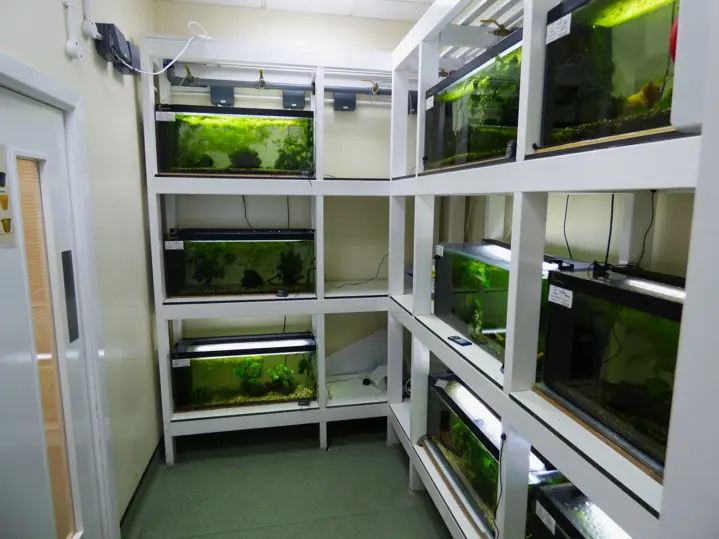
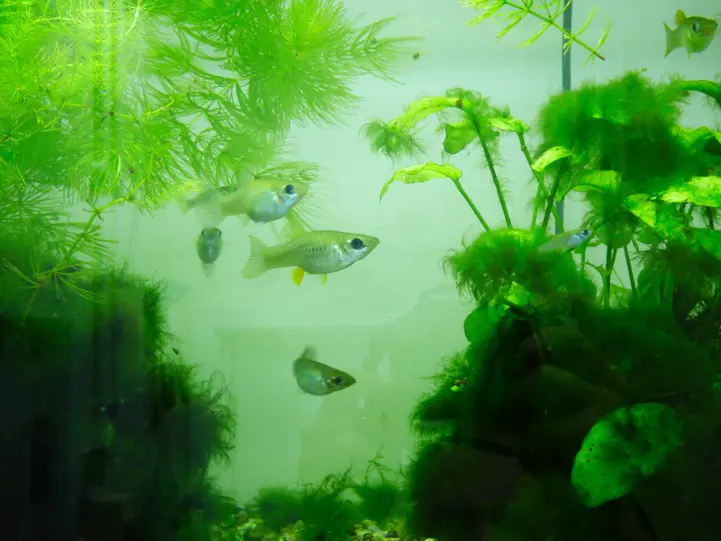
The Bourne Laboratories are equipped with both marine and freshwater aquaria, suitable for housing a wide range of fish and invertebrates in specialist facilities. Current species housed include zebra fish (Danio rerio), guppies (Poecilia reticulata), Atlantic mollies (Poecilia mexicana), Eastern mosquitofish (Gambusia holbrooki), and Chinese mitten crabs (Eriocheir sinensis).
Glasshouses
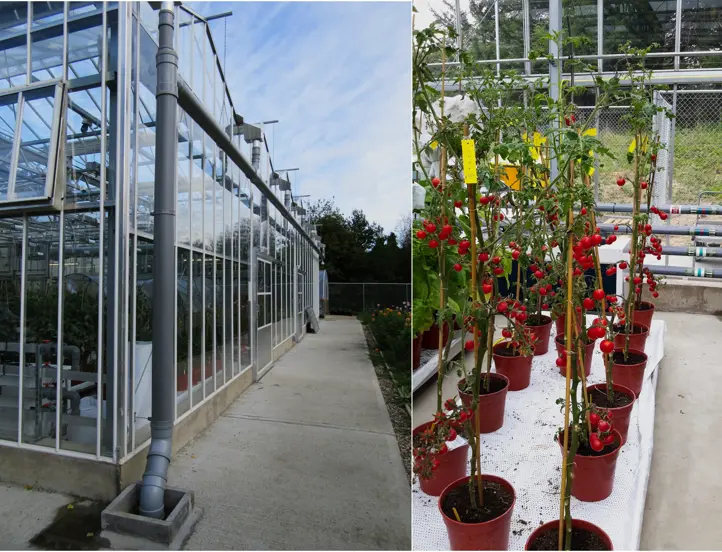
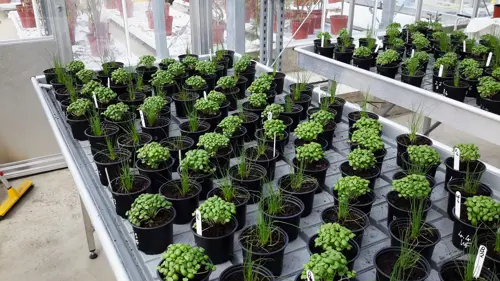
There are three plant growth chambers attached to an ancillary building containing a seed drying room and harvest room as well as a large potting, sowing area and compost store. It has been ergonomically designed to enable technicians and research workers to move plant material easily throughout the facility. The highly contemporary design optimises the amount of light which enters the plant propagation space.
A biodiverse campus
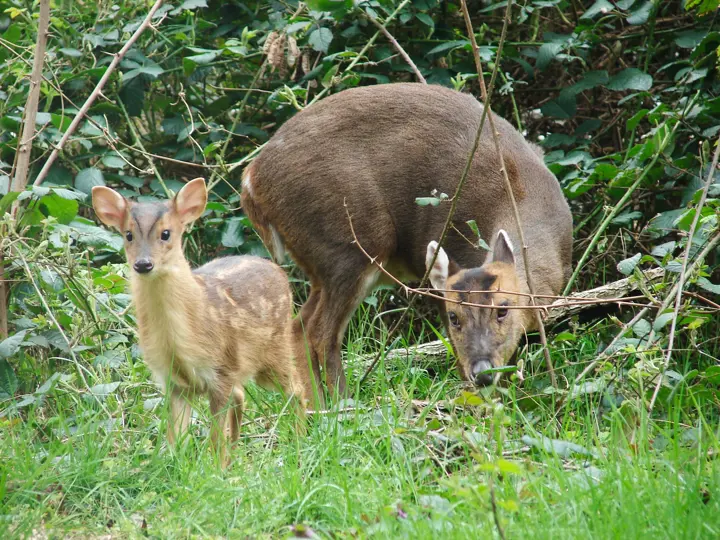
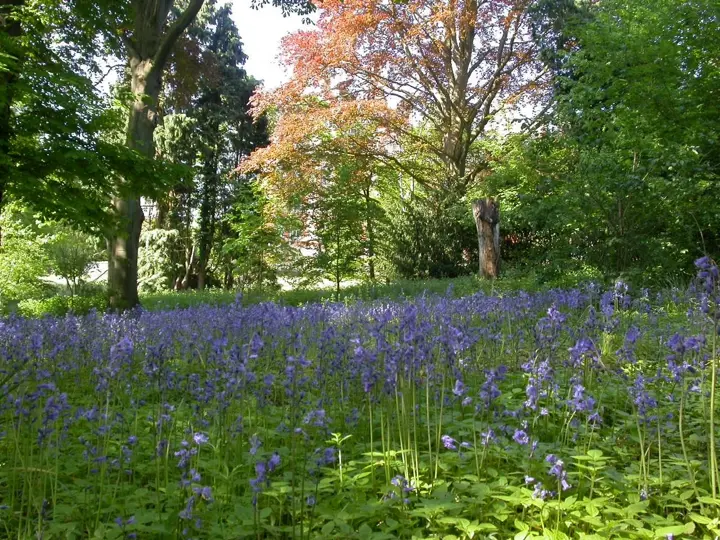
Our leafy campus is home to a wealth of species of plants and animals which provides plenty of fieldwork opportunities for whole-organism biology. We are also close to extensive areas of natural habitat and sites of national scientific importance such as Windsor Great Park, Box Hill and Chobham Common.
We also have a pair of Peregrine falcons (Falco peregrinus) which breed on campus each year (March-July). Check out their live stream here.
The Museum
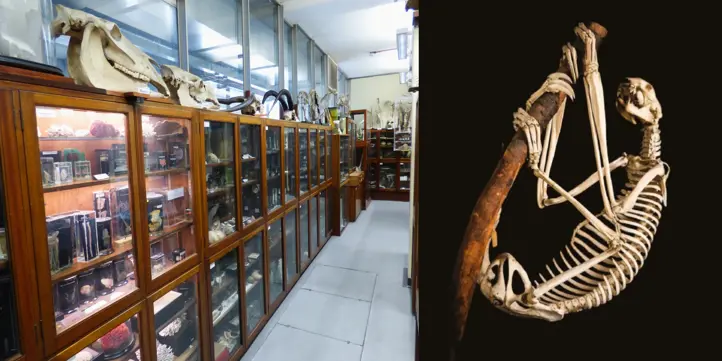
The Department’s comparative anatomy museum comprises approximately 1,500 zoological and botanical specimens along with more than 12,000 microscope slide preparations. These resources were used for biological and biomedical teaching in the preceding departments of ‘Natural Science’, ‘Zoology’, ‘Botany’, and ‘Human Physiology’ which form an integral part of the 150 year history of the Department of Biological Sciences.
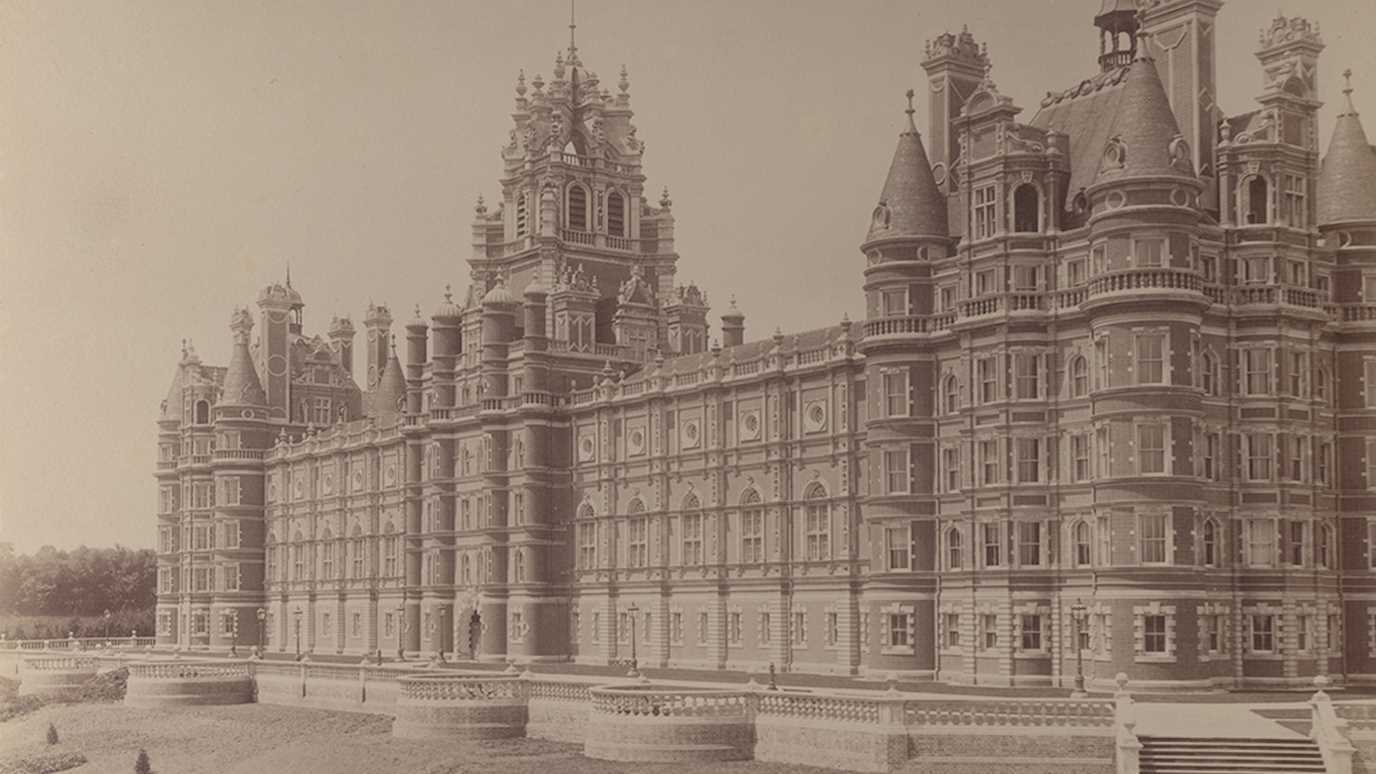
Although some material dates back to the 19th century, the bulk of the collection was acquired independently by Royal Holloway and Bedford Colleges during the early and mid-20th century. Some specimens were collected by members of staff and students on field trips. Further material was donated by local zoos, safari parks or private individuals. The Royal Holloway collection has its roots in the general-purpose 'College museum' which was created when the institution opened in 1886, whilst the Bedford collection gradually accrued in individual departments from the late 19th century onwards. Unfortunately the Bedford zoological and botanical museums along with the herbarium were, with the exception of a handful of specimens, destroyed during the war in 1941 when Bedford College suffered substantial bomb damage necessitating these collections to be largely rebuilt in the late 1940’s.
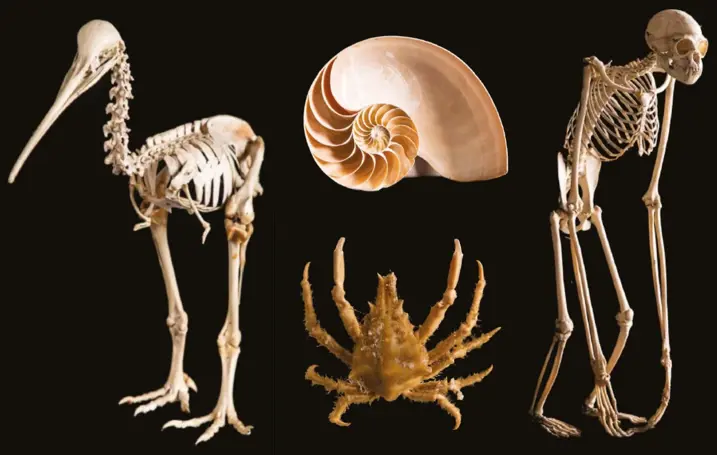
The museum remains in constant use today at Bourne Laboratory and forms an important part of the undergraduate teaching provision where it is primarily used to support practical classes as part of the ‘Biology’, ‘Ecology and Environment’ and ‘Zoology’ degree courses.
The historical Herbarium
Discover a remarkable botanical archive that captures more than a century of exploration, teaching, and scientific discovery. The Royal Holloway University of London Herbarium comprises around 14,000 specimens—including approximately 12,000 vascular plant sheets—carefully preserved and systematically catalogued by Emeritus Professor Brian Ferry. Formed from the historic collections of Royal Holloway and Bedford Colleges, it provides a rich record of plant diversity, research, and the people who shaped botanical science, leaving a legacy that continues to inform research and teaching today.”
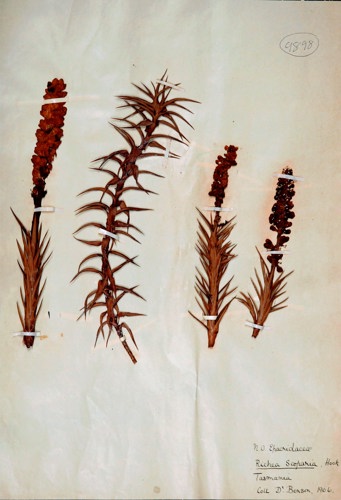
At the heart of the collection is Margaret Jane Benson (1859–1936), a pioneering botanist represented by around 400 specimens. As Head of Botany at Royal Holloway and one of the first women elected to the Linnean Society of London, Benson played a central role in advancing both botanical research and women’s place within it. Her international work is reflected here in specimens such as Tasmanian honeybush (1906), illustrating the global reach of early women scientists.
The herbarium also highlights the contributions of other trailblazing women: Emilia Frances Noel (1868–1950) gathered plants in Kashmir that informed her widely read Wild Flowers of Kashmir (1903), bringing botanical knowledge to broader audiences. Particularly significant are the Livett sisters, Mary and Fanny, whose work exemplifies the often under-recognised role of women in 19th-century science. Active members of the Bristol Naturalists’ Society, they undertook extensive fieldwork across southwest England, carefully collecting and documenting local flora. Their specimens—such as Portland spurge, collected alongside Rev. R.P. Murray—fed directly into foundational regional works and captured valuable records of both common and rare plants. Through their dedication, the Livetts helped shape botanical knowledge at a time when women’s contributions were rarely formally credited, making this collection an important record of their scientific legacy.
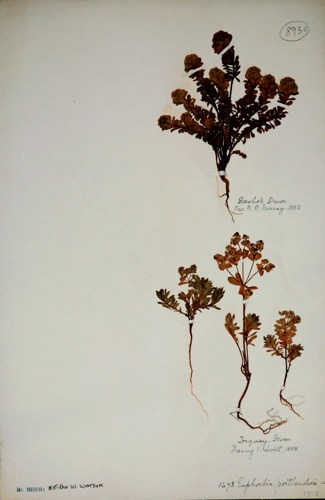
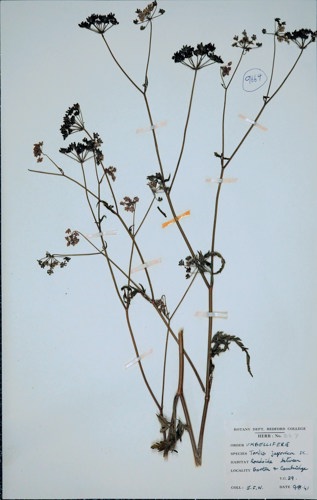
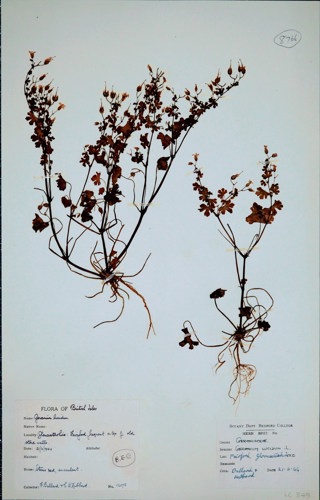
Alongside these figures are leading twentieth-century botanists who shaped modern plant science. E.F. Warburg and T.G. Tutin, contributors to the landmark Flora of the British Isles (1952), are represented here, including Warburg’s Japanese hedge parsley (1941). C.E. Hubbard, a world authority on grasses, is present through his personal reference collection, while Francis Ballard and C.E. Hubbard’s joint specimen of shining crane’s-bill (1944) reflects collaboration between leading experts.
Francis Rose (1921–2006), a lecturer at Bedford College from 1949 to 1975, is especially well represented, with around 750 specimens. His much-loved book, The Wild Flower Key (1981), became one of the most widely used and trusted guides to identifying British plants, valued by both beginners and professionals for its clarity and accessibility. A fine example of his work can be seen in the specimen of alpine lady’s mantle (1948) featured here.
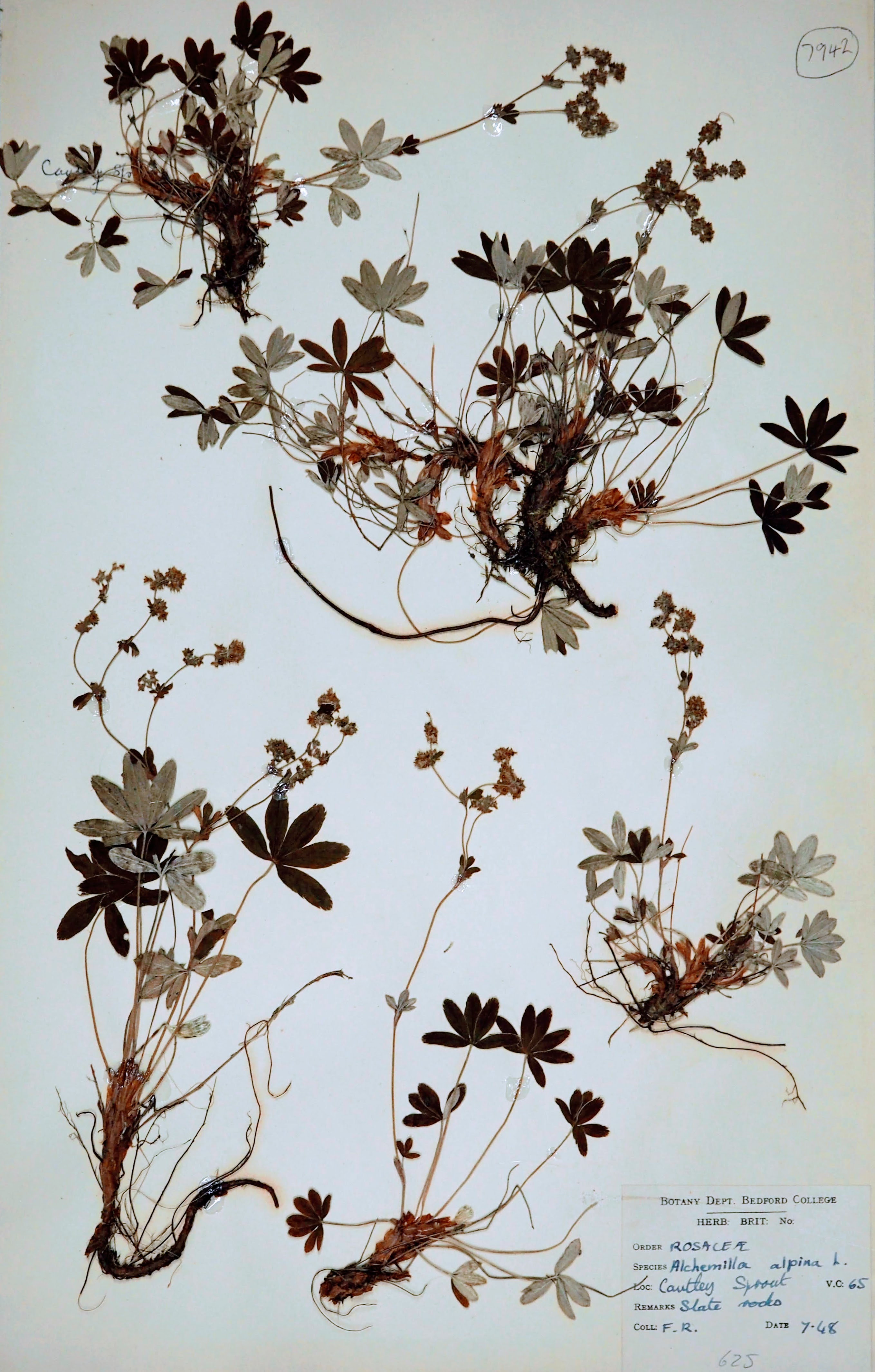
The collection spans both everyday and exceptional plants. From 19th-century records to wartime collecting and post-war teaching specimens, each sheet preserves a moment in time: where a plant grew, who collected it, and how it contributed to scientific understanding.
Together, these specimens form more than a catalogue of plants—they are a living record of botanical discovery and of the individuals, many of them pioneering women, whose work helped shape the science we know today.
For further details on the current efforts to preserve this precious collection please contact Dr Paul Devlin and Prof Alessandra Devoto.
Bourne Laboratory
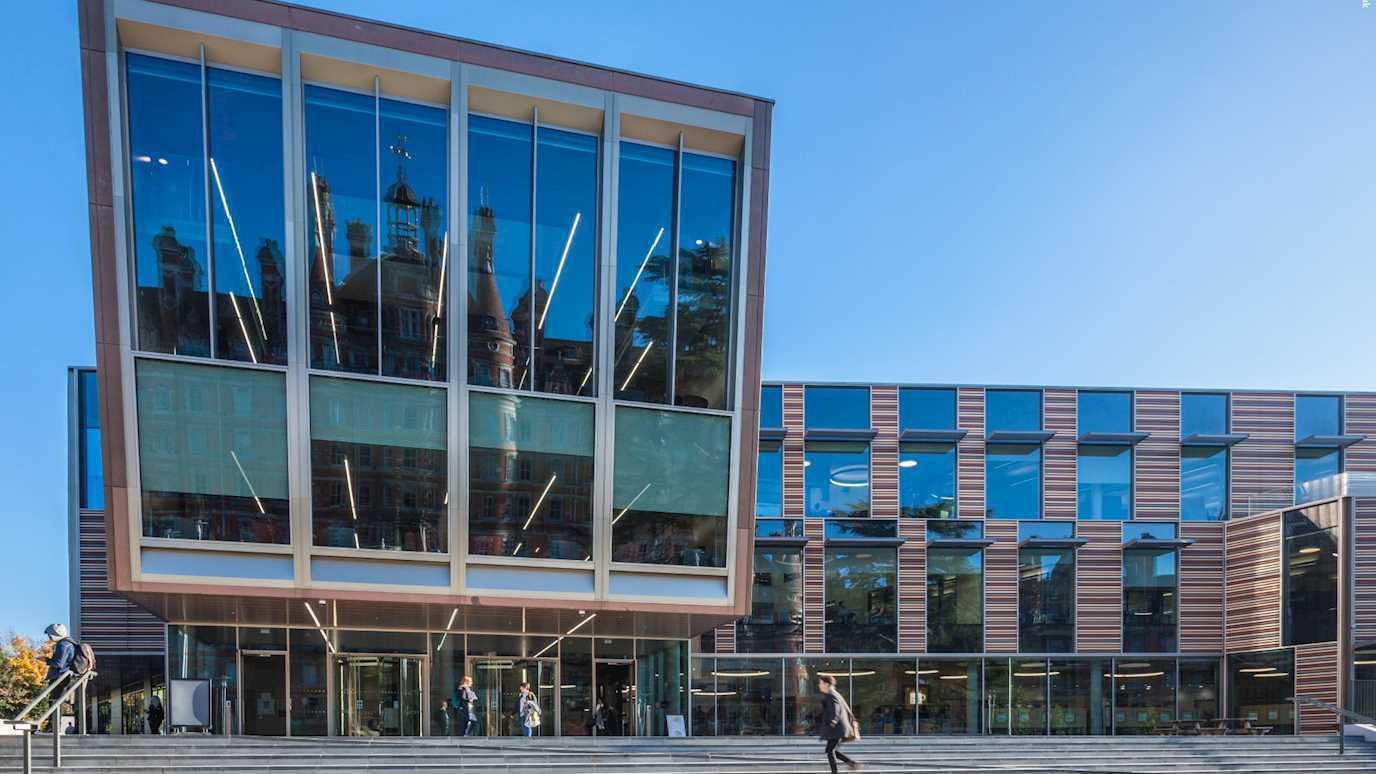
Our base is the Bourne Laboratory right at the heart of Royal Holloway's parkland campus. Our laboratories have cutting-edge equipment and facilities for excellent first-hand training in scientific skills.