Meet Robin Williams, Professor of Molecular Cell Biology – driven by the thrill of discovery, he’s uncovering exactly how medicines work to develop new treatments that help patients live happier, healthier lives.
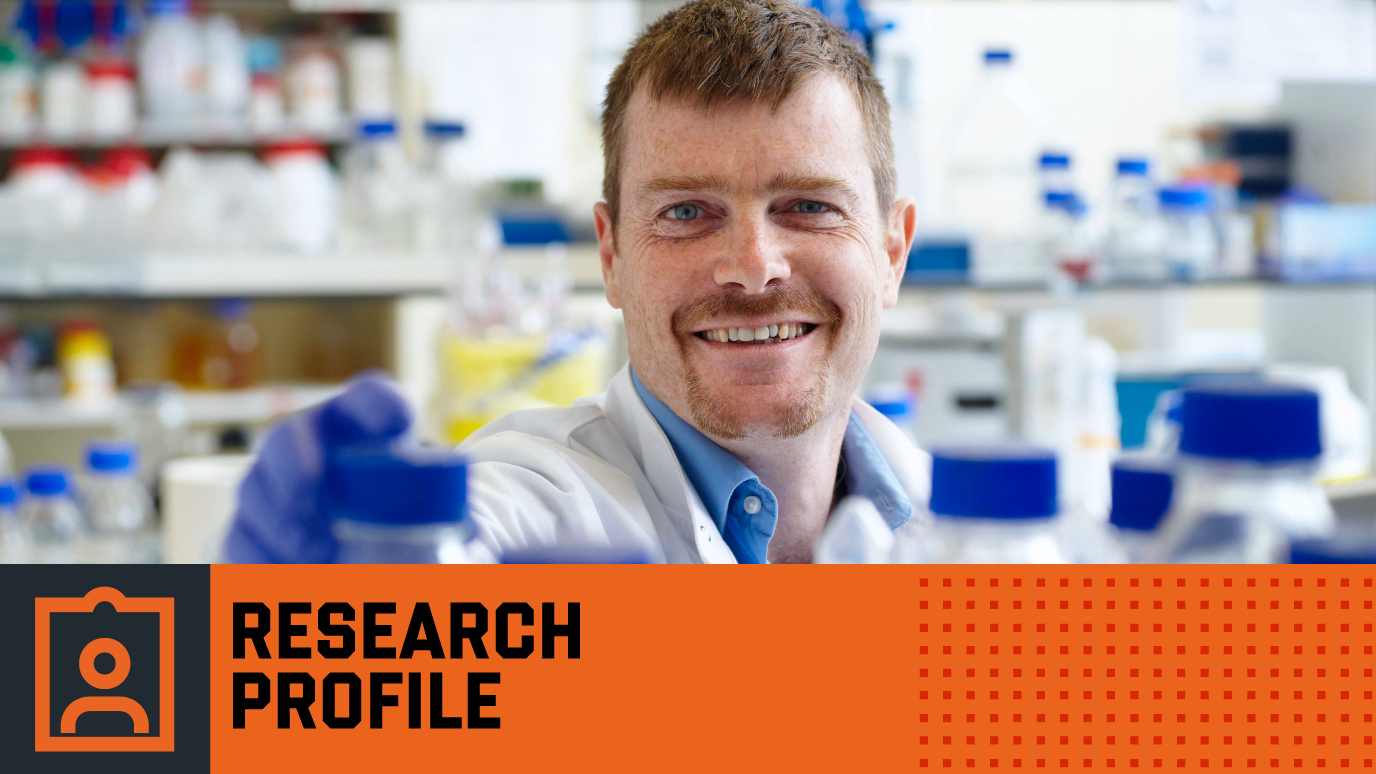
“I love the research we do. One day I could be talking about curing epilepsy, the next looking into solutions to the world’s climate crisis.”
Driven by the excitement of the moment of discovery, Professor Robin Williams investigates how diseases and medicines affect cells. Championing an animal-free approach to medical research, his work has led to the development of new treatments that help patients live happier and healthier lives.
What does your research cover?
I investigate how naturally occurring chemicals and medicines work at a molecular level. My lab focuses on medical research – understanding how diseases affect cells and how medicines combat that. We then work with industry to help develop our discoveries into new therapeutic treatments.
“Most people don’t realise that we often don’t know how medicines actually work, just that they do. My research sets out to discover exactly how a medicine works, so we can develop new treatments that work better.”
The most impactful work we’ve done is around epilepsy, but our research has also explored cancer, bipolar disorder, Alzheimer’s disease and schizophrenia. I’ve even collaborated with researchers in the Seed Biology and Technology Laboratory here at Royal Holloway to study a particular plant chemical that suppresses plant growth. That project led us to understand how plants lose water during drought and how that chemical can help crops cope with drought and climate change.
How do your research methods differ from more traditional methods?
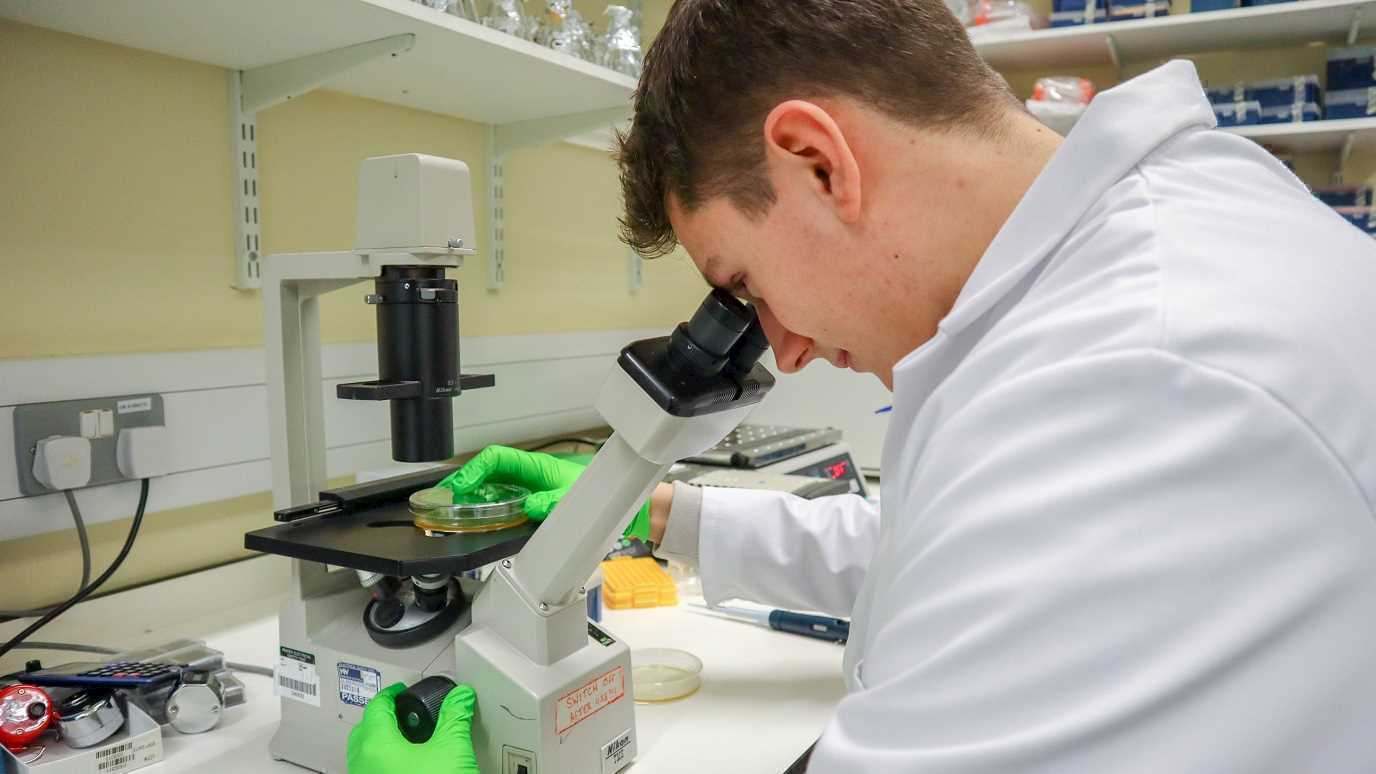
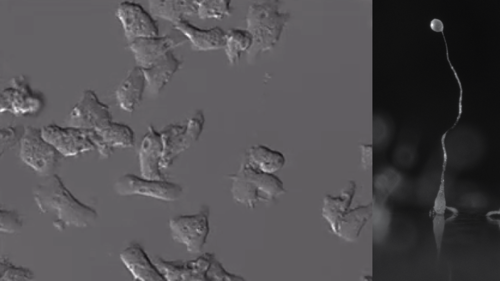
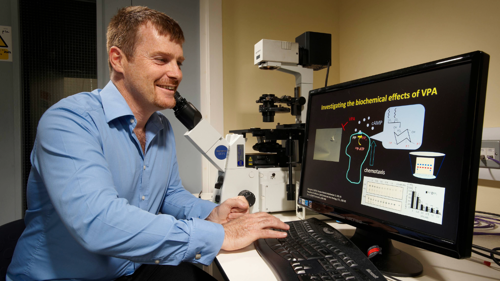
My lab takes a different approach than most to biomedical research in that we don’t use animals for our research or tests. Instead, we use what’s known as a social amoeba called Dictyostelium, a single celled organism that lives in the leaf litter. Because it’s not a complex organism, we’re able to manipulate its genes in the lab, so we can study the effect of the medicines we’re testing and uncover how they’re working.
The easiest way to explain it is with a lock and key metaphor. The medicine is the key that binds to a particular protein - the lock - which then changes the way it behaves, causing a medicinal effect in the cell. Once we identify the protein that a medicine interacts with, we can search for other compounds that target the same protein, sometimes more safely or more powerfully. That’s the starting point for developing new treatments.
“Our group studies medicines to understand their molecular mechanism. Once we uncover which protein a particular medicine affects, we can target that protein and discover other compounds that do the same thing but may be more potent or safer.”
How does using a social amoeba help accelerate bio-medical research?
The amoeba is an incredibly efficient way of carrying out our research. In one dish in the lab, we can grow a pool of 40,000 variants, each missing a different gene. Then, if say we’re investigating a medicine that slows growth, we add it to the dish and only the one variant that lacks the target protein will continue growing normally. Within days we can identify that cell and see which protein is affected by the medicine.
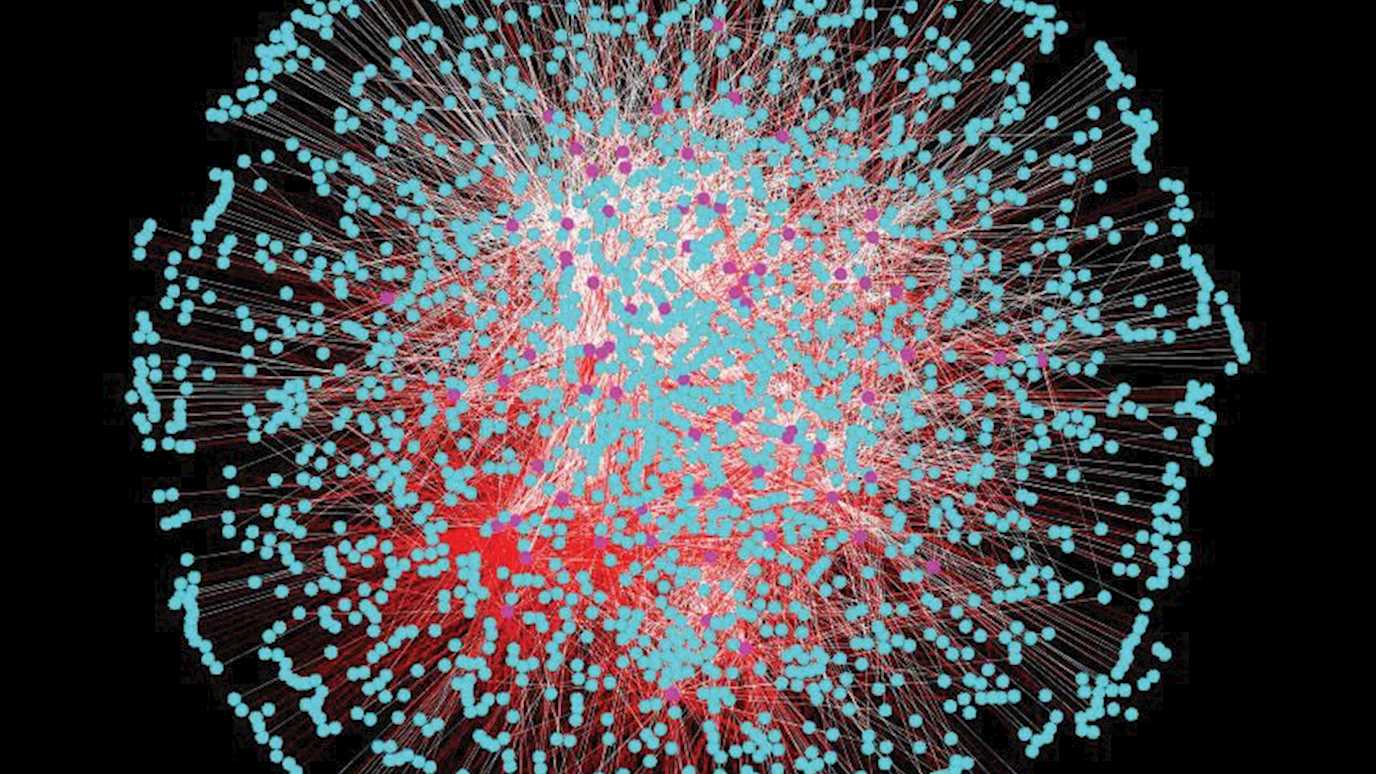
We then use AI to predict how strongly different compounds will bind to the protein before we test the most promising ones. Once we have made that discovery, the new compound can be tested using human cells grown in a dish in the lab to show it works.
This approach dramatically speeds up research while using a tiny fraction of the animals typically required.
There’s an ethical element to your work. Tell us more about that?
My group is a champion for what's called 3R’s research - Replacement, Refinement and Reduction – which promotes reducing the use of animals in medical research wherever possible.
Using the amoeba, we’ve replaced tens of thousands of animal experiments. Only when we’ve clearly identified a mechanism do we move to a very small number of follow up tests using human cells or, when absolutely necessary, animal models. We’ve had very successful results using this process.
We’ve secured major funding from the Wellcome Trust and NC3Rs and charities for this approach, and over the course of my career, our methods have probably saved the lives of thousands of animals.
What’s the most surprising aspect of your work?
For most people, the surprising aspect of my work is the amount we can do working with just one cell type. Using the social amoeba, I’ve been able to look into epilepsy, cancer, neuropsychiatric conditions, and even plant biology.
“Most people would not believe that. But we have validated it, so you know it is true - one size does fit all.”
What challenges have you faced within the scientific community for pursuing these research methods?
There are two billion years of evolution between the amoeba and a human cell. Many researchers think that’s too much difference to produce any meaningful research or results.
Using these research methods has caused issues when we’ve applied for grants and funding. Many of the expert reviewers who evaluate them have spent their careers using animal models and believe they’re the only valid way to study neurological and psychiatric conditions. They want to see evidence of something working in an active brain.
While there’s still a bias towards traditional animal models, we’ve repeatedly shown that our discoveries work in human cells, and the work we do can have real-world impact.
Why does your research matter?
“I think science should be there to improve our society, not to make us live longer, but help us live happier and healthier lives.”
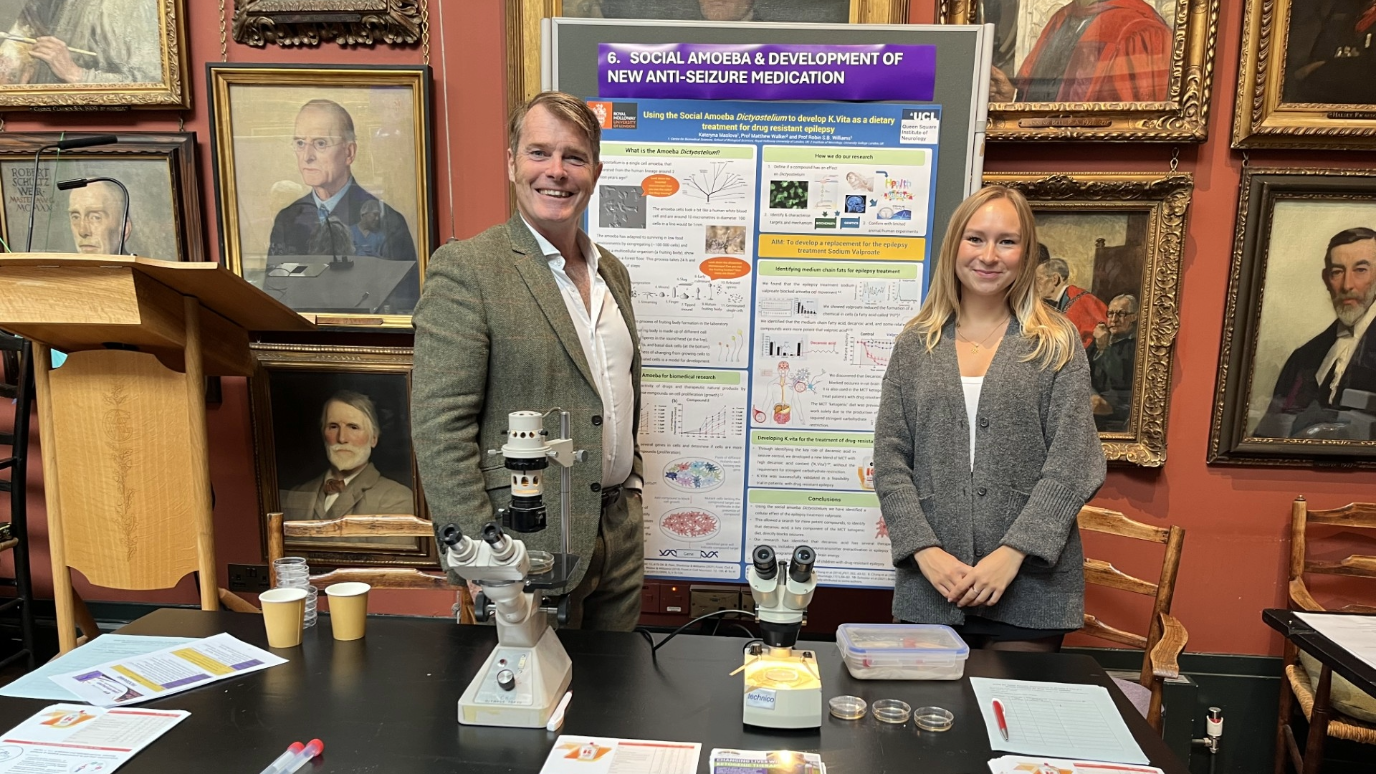
I don’t like the idea of spending millions of pounds on looking at something that is only of interest to a small group of highly focused academics. But if the blue-sky thinking that I do with my lab can help improve the patients’ health and wellbeing, I think it’s worth it. I’m really proud of the fact that through my research a new dietary treatment has been developed that the NHS is using to treat children with drug resistant epilepsy. And it all came from using an amoeba.
For me, that is exactly what research and science should be doing – making discoveries that change lives.
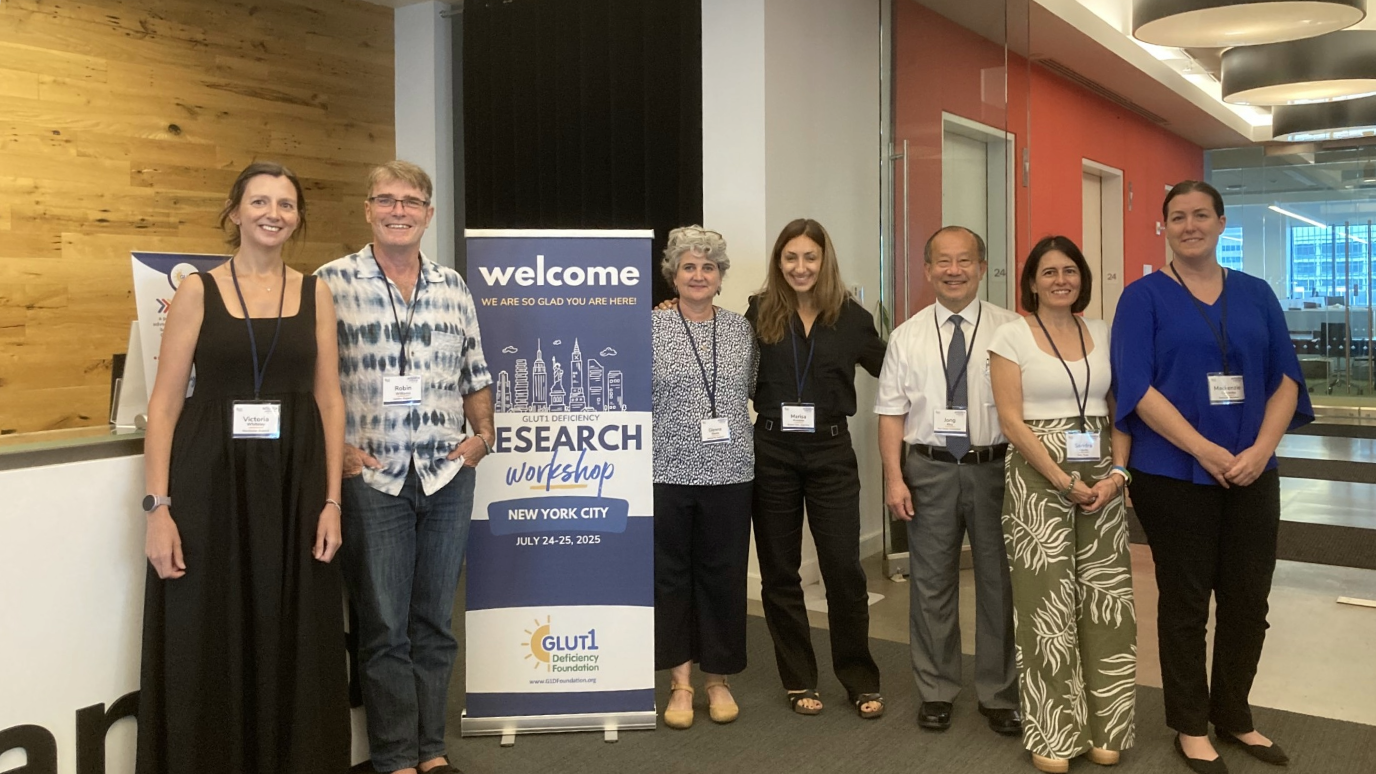
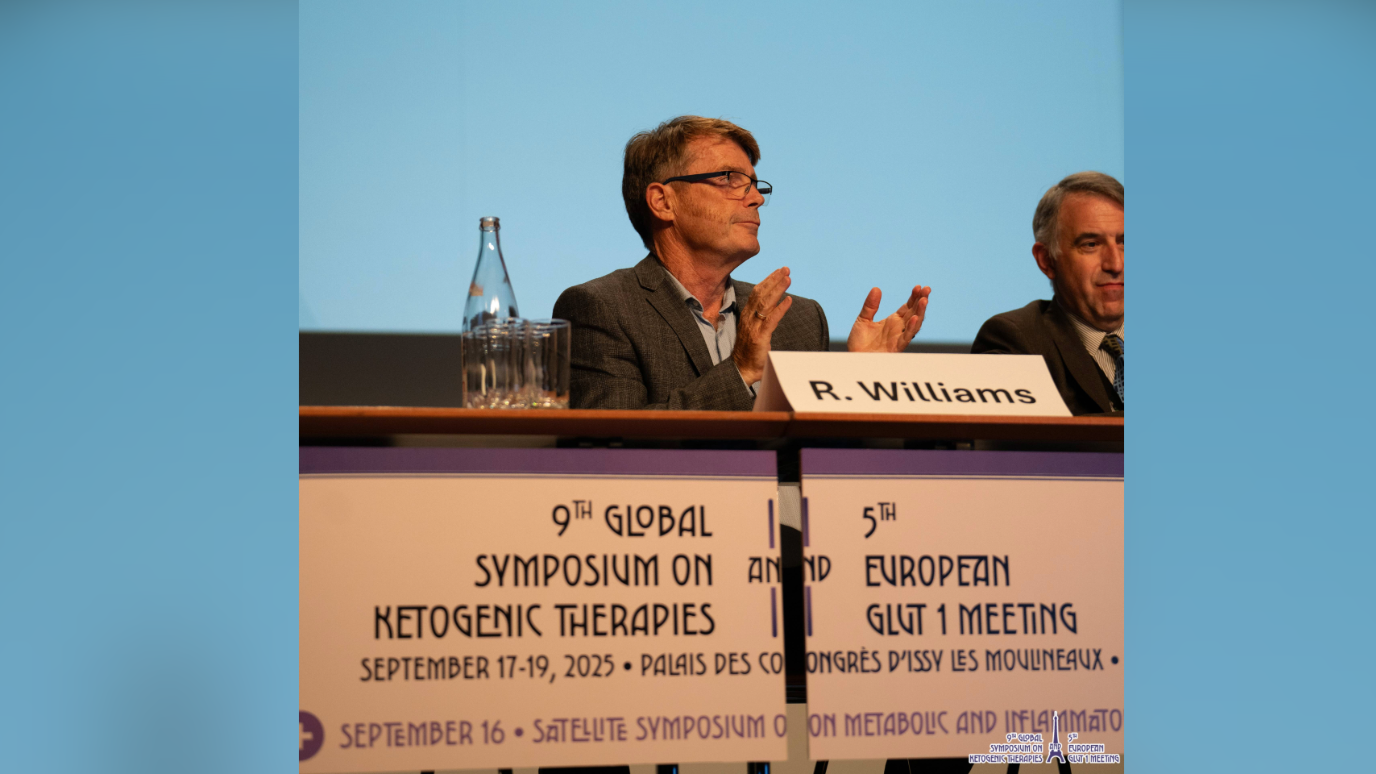
Robin Williams with other researchers at Glut1ds Research Workshop Meeting New York 2025
How do you bring your research into your teaching?
I like teaching based on research, because I can make it come alive for the student. For example, when I teach epilepsy, we look at experiments that use slices of brain triggered to have seizures and treated with new medicines or we hear from people with direct experience of the condition.
I teach second and third year undergraduates in neuroscience and molecular cell biology. Seeing the science in action helps them connect with it and engage in a different way. I want to equip them with more than just knowledge, provide them with the ability to understand, to ask the right questions that make the next discovery, and to inspire them to become the next generation of scientists that solve the problems we just can’t understand today.
What’s next for your research?
25 years ago, I started my research career by looking into bipolar disorder, and now I’m returning to studying psychiatric conditions using the amoeba as the basis for our research.
We’re also moving into using human derived stem cell models of diseases – taking our results from the amoeba straight into human cells and cutting out animal research entirely. For neurological disorders, these stem cells are the closest thing we have to a human brain. Combining them with our amoeba platform is going to be incredibly exciting.
…..
Robin’s work shows that ethical innovation and scientific progress can go hand in hand, demonstrating how Royal Holloway research is helping to transform the way modern biomedical science is carried out.
Discover more about Robin's epilepsy research
Return to our Research in Focus page to uncover more exciting research happening at Royal Holloway, University of London.
Research in Focus