Researchers from Royal Holloway’s Department of Biological Sciences are helping to tackle one of the biggest threats to animal and human health: Antimicrobial Resistance (AMR). When antibiotics are overused/misused, bacteria learn to survive them. While this problem affects animals and humans alike, farming is one of the places where it can be tackled.
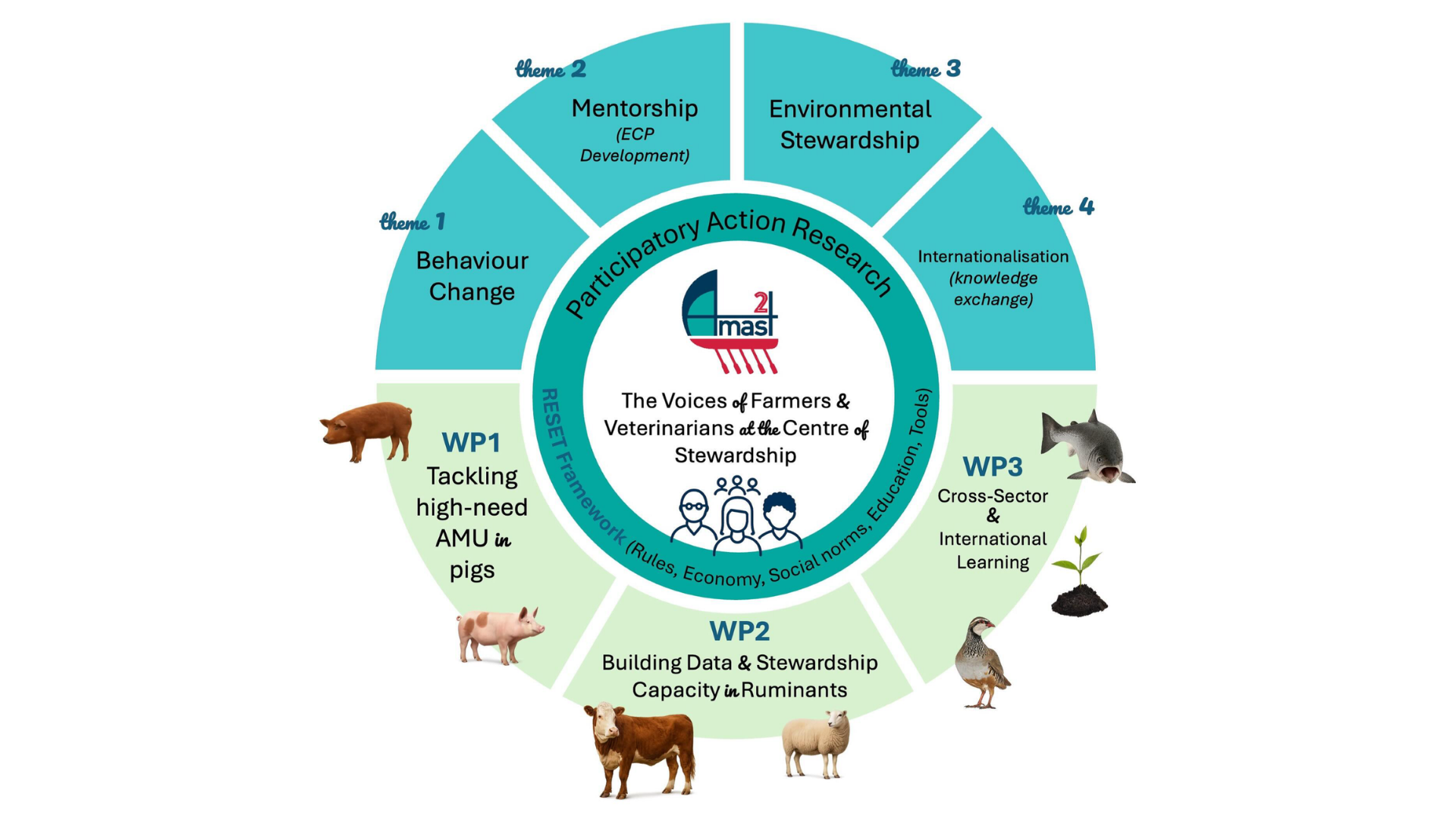
The work is part of AMAST Phase 2, a £3 million project funded by UK Research and Innovation (UKRI). It is one of 18 projects sharing a £54 million investment from the UK government and UKRI to tackle biosecurity threats. AMAST is led by the Quadram Institute and brings together 13 research organisations, including the Royal Veterinary College and the Universities of Cambridge, Leeds, Leicester and Stirling, along with partners from farming, veterinary practice, industry and government.
Since it was set up in 2024, the AMAST network has grown to more than 250 members. They have spent its first phase listening to farmers, vets and industry about where progress on antibiotic use is needed and what is getting in the way. Phase 2 moves from listening to action. Over five years, it will test practical approaches to responsible antibiotic use in three areas:
Pigs: working with farms facing ongoing disease problems, using swine dysentery as a model to link better diagnosis, biosecurity and farm management.
Cattle and sheep: putting the UK Ruminant Antibiotic Stewardship Roadmap into practice.
Across the food system: finding approaches that work across livestock, fish farming, gamebirds and crops, and bringing in lessons from overseas.
Dr Eltholth, Associate Professor in Global Health, co-leads the AMAST network and leads Royal Holloway’s part of the project. His team will work with the Royal Veterinary College, RCVS Knowledge and the Royal Agricultural University on cattle and sheep. They will look at why antibiotics are still used where they are, from economic pressures to climate-related disease. With farmers and vets, they will design simple, trusted ways to record antibiotic use so that farms can track their own progress. They will also test alternatives such as vaccines, better diagnostics and improved biosecurity, and use what they learn to update the national roadmap for the sector.
Dr Eltholth said: “UK farmers and vets have already made real progress in reducing antibiotic use. The next step is harder. We need to understand why antibiotics are still needed on some farms, and give people the data and practical tools to make confident decisions. This phase is about working alongside the people who will use our findings, so that what we develop actually works on the farm.”
Professor Isabel Smallegange, Head of the Department of Biological Sciences, said: “We are proud to contribute to this project, which connects research with the practical challenges facing farmers and veterinarians. Working closely with those who will use the findings will help the team develop approaches that are workable in everyday practice and support responsible antimicrobial use alongside animal health and welfare.”
The project’s findings will feed directly into the UK National Action Plan on Antimicrobial Resistance.