Techne

Georgia Dimdore-Miles profile
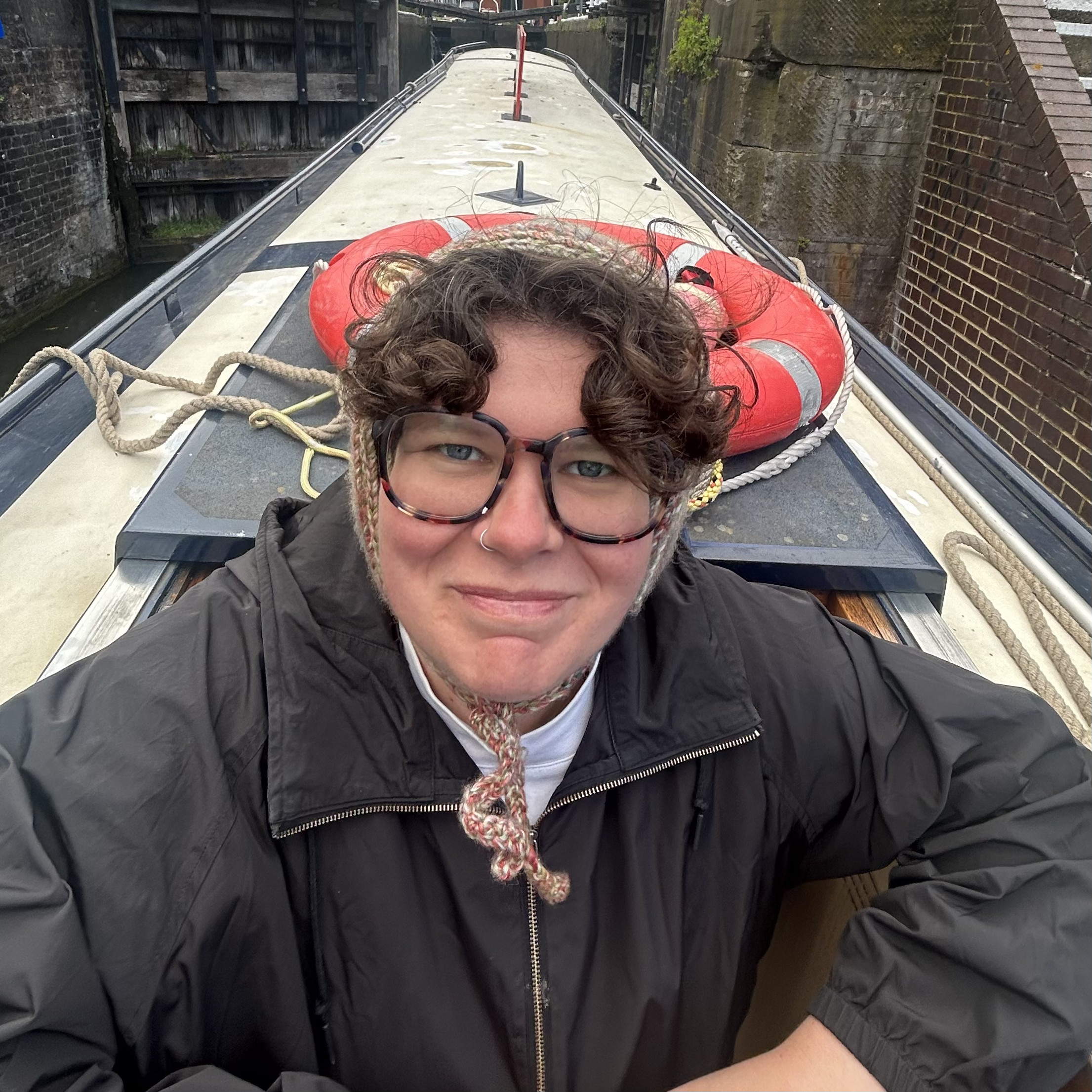
Georgia Dimdore Miles

Georgia Dimdore-Miles

Royal Holloway University of London (2025)
georgia.dimdore-miles.2025@live.rhul.ac.uk
She / Her

Supervisor(s)

Professor David Gilbert & Dr Amy Tooth Murphy

Thesis

Cruising the cut: Lesbian histories of mobility and queer futures of boat-dwelling on the UK's canals

About

Cycling to work on the canal towpath across Hackney marshes was where I first encountered lesbians and queer women living on houseboats: commanding tricky pieces of navigation, tackling maintenance and tending top-deck houseplants. I was introduced to these hidden worlds of an unexplored network of mobile queer life on the UK’s waterways. This research project traces a lineage of continuous cruiser canal boat living, from lesbian ecofeminism of the 1970s and 1980s to the contemporary and future experiences of queer women. This shift in language reflects the fluid changing identities of its participants. 

The project addresses social inclusion, marginality and the precarity of living spaces, examining life on the canals for a particular minority group. The crisis of housing affordability, both owned and rented, has affected minority groups disproportionately. The precarity of fixed, permanent living spaces, has led to many minorities cruising the country’s waterways, adding to the 35,000+ barges and houseboats recorded in the 2022 UK boating census. This PhD explores the undocumented lesbian history of a contemporary queer community, providing an understanding of the ways of life and ongoing socio-economic challenges of these alternative home spaces, and exploring a neglected aspect of historical and contemporary queer worldbuilding. The project also looks outwardly at the wider diversity of those described as “vulnerable boaters” by the Canal and River Trust, exploring how their precarities and approaches to living intersect with lesbian and queer lives (APPGW, 2021).  

The project’s primary research methods include oral histories, mobile (or ‘floating’) interviews and participatory ethnography. The project will also create its own mobile archive, providing historical and contemporary connections between disparate LGBTQ+ individuals and groups on the canal network. This, along with the oral histories, will be deposited in the Bishopsgate Insitute, making a contribution to queer/lesbian historiography and the history of housing.

Tags: