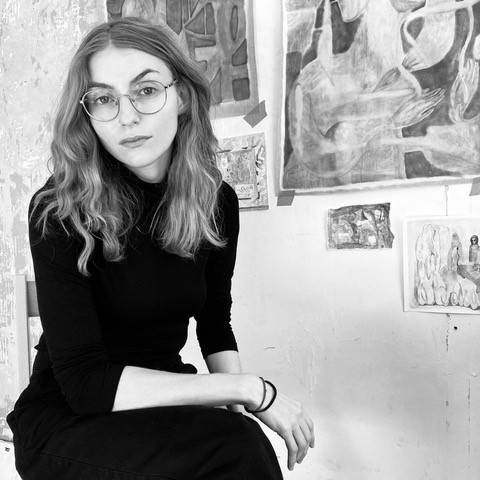
Fragmented Bodies, Fragmented Stories: Exploring Endometriosis Through Multidisciplinary Creative Practice to Challenge Cultural Narratives of Women's Pain
About
Endometriosis is an incurable disease affecting 1 in 10 menstruators and causing severe, life-impacting pain and other symptoms (WHO). As a gendered health issue it is underfunded, misdiagnosed: on average it takes 8 years to receive a diagnosis.
Hallström (2024) uses the powerful term “endo time” to honour the episodic, cyclical and fragmentary rhythms of life with endometriosis. This project seeks to respond by developing Elkin’s concept of fragmentation (2023) as an emancipatory lens to investigate through creative practice both collective and individual stories of living with endometriosis in three contexts: body, time and place. This research asks: what forms of art embody the fragmented experience of endometriosis? Can these approaches challenge current dominant cultural attitudes, fostering empathy towards endometriosis and women’s experiences with pain?
Historically, women were expected to retreat to private spaces during moments of bodily vulnerability. Endometriosis, however, causes the body to become a site of resistance. By drawing on Hamraie's account of “crip theory” as a “commitment to shifting material arrangements” (2023) this project envisions fragmented “endo time” not as a limitation but as a source of empowerment. The project will extend knowledge of and test that empowerment by creating a digital archive, inspired by Mary Kelly’s Post-Partum Document, thus providing a generative space to present autoethnographic interdisciplinary works alongside collective storytelling. Women’s lived experience will be gathered through historical and online archives, such as the Women’s Health Library and Endometriosis UK. The digital archive will then serve as a springboard for my producing a refined body of visual work integrated with creative life writing. These new, hybrid forms of representation for experiences of endometriosis will offer a space for mediation between those with the disease and those trying to understand it, challenging dominant notions of women’s pain within the medical system and public.